
Key takeaways
- Protein, soluble fiber, vegetables before starch, and slower eating have the most useful evidence.
- Berberine, psyllium, and other “natural GLP-1” products have narrower effects than their marketing suggests.
- Patches, drops, and sprays cannot deliver GLP-1 medication through intact skin.
Your gut released GLP-1 this morning, within an hour of breakfast. GLP-1 is a gut hormone that helps regulate blood sugar, insulin, stomach emptying, and appetite. A meal produces a peak of about 30 pmol/L in a healthy adult, and it takes one to two minutes for the active hormone level to halve. By comparison, we calculate that a weekly semaglutide injection holds roughly 15,800 to 29,900 pmol/L, around the clock, for seven days.
That gap is the point: food can trigger GLP-1, but it does not match prescription exposure.
What GLP-1 is and where it comes from
GLP-1 comes from specialized cells in your gut lining. They sit all along the intestine, and are most crowded in the lower stretch.
After you eat, GLP-1:
- Stimulates insulin release when blood glucose is high.
- Reduces glucagon, a hormone that prompts the liver to release stored glucose.
- Slows stomach emptying.
- Signals fullness through the gut-brain system.
Prescription medicines use the same broad hormone pathway but remain active much longer. Semaglutide and tirzepatide also reach much higher and more sustained exposure than a meal does.
The honest scale: food versus a prescribed dose
The natural hormone and the medication work through related biology. They do not produce the same exposure.
A meal creates a short pulse. An enzyme in your blood cuts the active hormone into inactive pieces almost immediately. Only a small share reaches the rest of your body intact.
A healthy adult’s post-meal GLP-1 peak lands near 30 pmol/L. Weekly semaglutide’s concentration when held steady is roughly 15,800 to 29,900 pmol/L. That second number is our own conversion from two separately published figures, so read the pair as a scale comparison rather than a clinical measurement.
Duration widens the gap. Food produces a response measured in minutes. Semaglutide’s level takes about one week to halve. Tirzepatide’s level takes about five days to halve.
So food and supplements can nudge your own GLP-1, but they do not maintain the receptor exposure associated with a prescribed dose. A drug designed to increase active GLP-1, sitagliptin, raises it by about two to three times and has a much smaller weight effect than semaglutide or tirzepatide.
Foods that raise your own GLP-1
The evidence is stronger for some of these than others.
1. Protein and amino acids
Protein stimulates GLP-1 release through amino-acid sensing in the gut. Human preload trials found a whey protein preload produced a GLP-1 response about 65% higher than casein over 90 minutes.
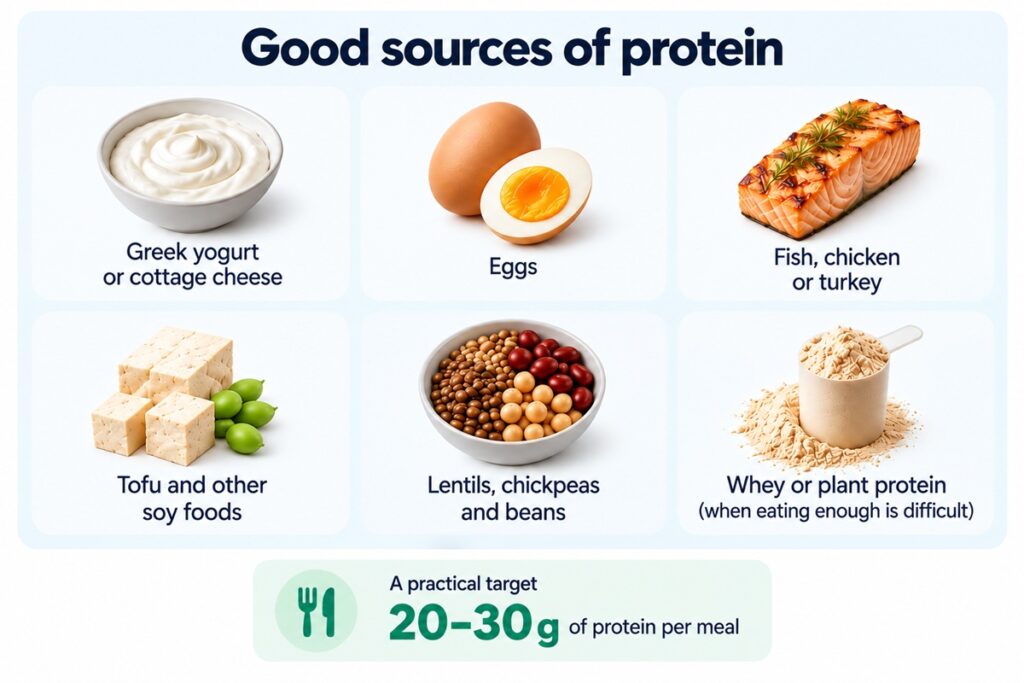
Useful options include:
- Greek yogurt or cottage cheese
- Eggs
- Fish, chicken or turkey
- Tofu and other soy foods
- Lentils, chickpeas and beans
- Whey or plant protein when eating enough is difficult
Protein also helps with fullness and lean-mass retention. A practical target during weight loss is roughly 20 to 30 grams per meal, although that range is a useful planning rule rather than a GLP-1 trial target.
2. The fat in olive oil and avocado
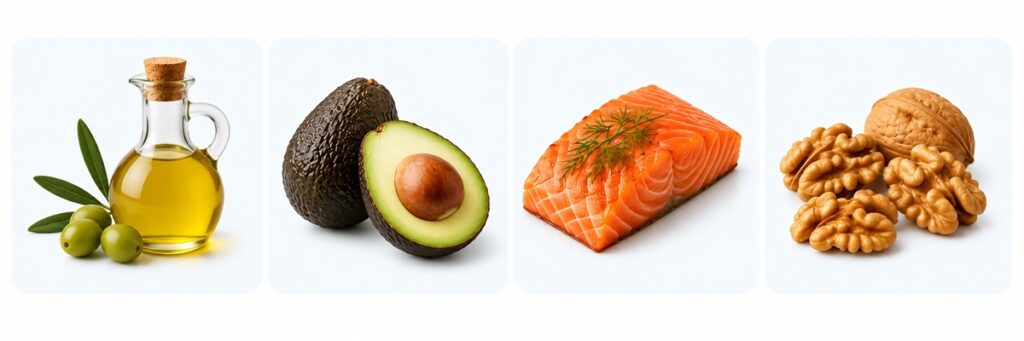
The fats in olive oil, avocado, salmon and walnuts switch on receptors in gut cells, in lab and animal studies. The human dose-response evidence is limited.
Use these foods for their broader nutritional value, not as a way to chase a measurable hormone increase. Fat is calorie-dense, so adding large amounts for a theoretical GLP-1 effect can work against weight loss.
3. Fiber that thickens in your gut
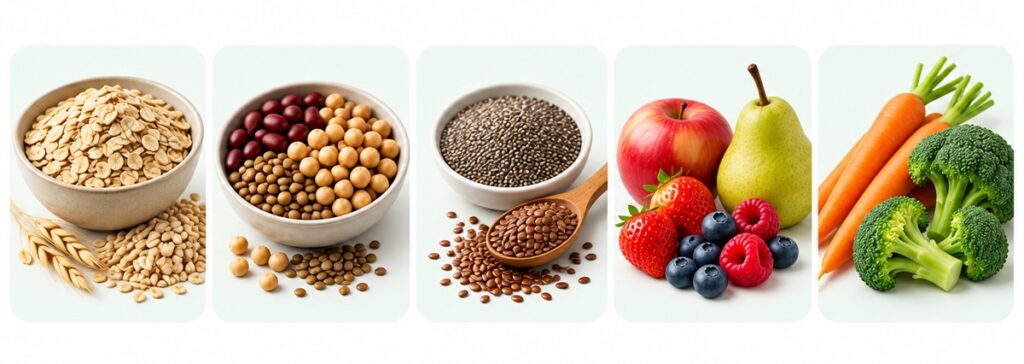
This kind of fiber thickens what is moving through your gut and can slow how fast your stomach empties. Soluble fiber can also be fermented by gut bacteria.
Good sources include:
- Oats and barley
- Beans, lentils and chickpeas
- Chia and ground flax
- Apples, pears and berries
- Carrots, broccoli and other vegetables
The GLP-1 evidence is mixed. One trial found that increasing the thickness of an oat oat fiber drink lowered post-meal GLP-1 even while slowing stomach emptying and improving glucose. More viscosity does not automatically mean more GLP-1.
4. Fermented foods and what gut bacteria make
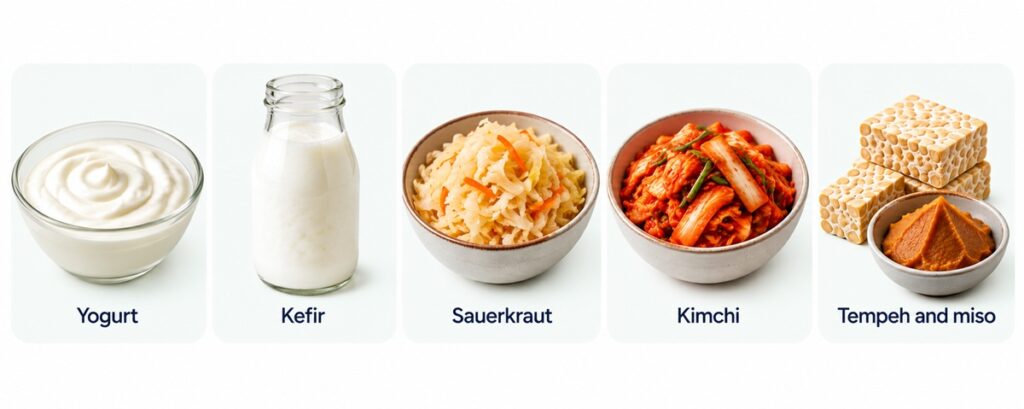
Gut bacteria ferment some fibers into short-chain fatty acids. Those compounds can switch on the same gut-cell receptors.
The mechanism is supported by cell and animal work. Human evidence is more limited. A lab-engineered fiber product increased GLP-1 in a small short-term trial, but that product is different from ordinary inulin powder or a serving of beans.
Yogurt, kefir, sauerkraut, kimchi and other fermented foods can fit a nutritious diet. No human trial establishes that a particular fermented food reliably raises GLP-1 enough to produce drug-like weight loss.
5. Bitter compounds
Bitter taste receptors also occur in intestinal tissue. Cell and tissue studies show that activating some of these receptors can prompt GLP-1 release. Berberine and several marketed botanicals are promoted through this mechanism.
The gap is the human result. We do not have a reliable trial showing that eating bitter greens produces a meaningful GLP-1 increase in people. Rocket, radicchio, endive and dandelion greens are still nutritious foods. Their value does not depend on proving a hormone effect.
Meal order and eating rate
The simplest useful change may be the order of the food on your plate.
In a small study of people with prediabetes, eating vegetables and protein before carbohydrate reduced the post-meal glucose spike by more than 40% compared with eating carbohydrate first. The protocol also increased GLP-1 and slowed gastric emptying.
Try eating vegetables and protein first, then bread, rice, pasta or potatoes. The study separated the courses, but a short pause is not required to make the general principle practical.
Eating more slowly may also increase the GLP-1 response and fullness. Chewing studies have reported higher GLP-1 after slower eating, although a universal 15- or 20-minute meal rule has not been established. Put the utensil down between bites and take smaller bites. The useful part is the slower pace, not a timer.
GLP-1 supplements: one honest read on each
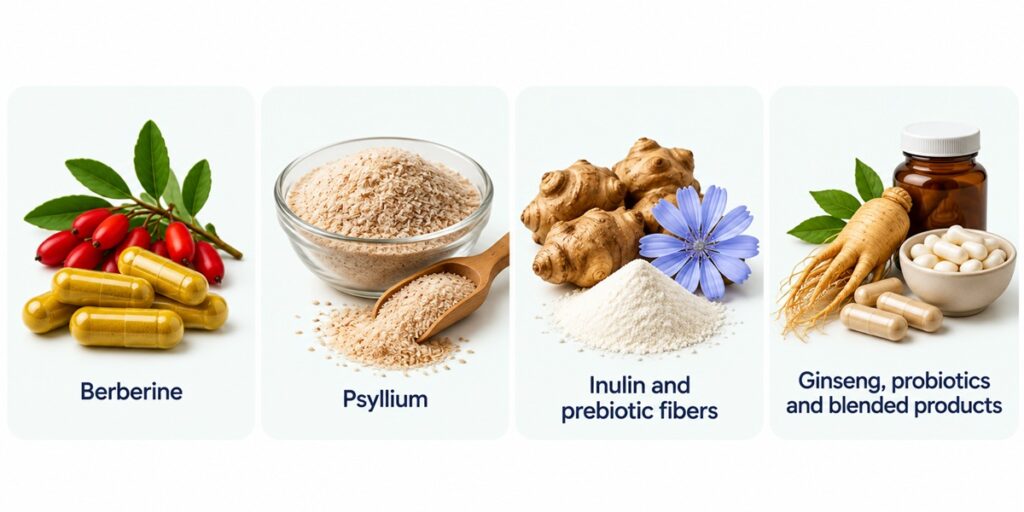
Most products sold as “natural GLP-1” boosters have not been tested as finished products in a human trial. A label claim is not proof that the product raises GLP-1.
Berberine
Berberine has real pharmacology, including effects on blood glucose in people with type 2 diabetes. Human weight-loss reviews disagree, with estimates ranging from no meaningful effect to roughly four pounds.
The GLP-1 claim is weaker. Human trials have not established that oral berberine raises circulating GLP-1. The mechanism has been observed in a human cell line and in mice.
Berberine also interacts with medicines and can increase the risk of low blood sugar when combined with glucose-lowering drugs. It is not appropriate during pregnancy, breastfeeding or infancy. Do not treat it as a replacement for a prescription.
Psyllium
Psyllium has useful evidence as a soluble fiber, for lowering cholesterol and for some effect on fullness. Its GLP-1 effect is unproven. A review found an increase in only one of four studies of psyllium-type fibers, and that result came from rye bread rather than psyllium itself.
Take psyllium with a full glass of liquid. Dry use can cause choking or obstruction. It can also affect the absorption of oral medicines, so ask a pharmacist how far apart to take it.
Inulin and prebiotic fibers
Inulin has a plausible mechanism, because gut bacteria ferment it into those same compounds. Human results are inconsistent. In one review of fructan studies, only two showed a GLP-1 increase, while seven found no effect.
The lab-engineered fiber product produced a small weight-gain-prevention result in a 24-week study. That finding does not establish the same result for ordinary inulin powder. Inulin, FOS and GOS can cause gas and bloating, especially at higher doses, and may be a poor fit for people with IBS.
Ginseng, probiotics and blended products
A small human trial of red ginseng reported a GLP-1 increase of under 4 pmol/L. It was a single, unreplicated result. That scale is far below the approximate semaglutide concentration described above.
A probiotic trial of one gut bacterium studied for this found some metabolic improvements, but no real change in GLP-1 in the blood. Products branded with “GLP-1” usually contain blends of ingredients such as berberine, probiotics, prebiotic fiber and vitamins. No trial on the finished blend means the product’s name is branding, not evidence.
GLP-1 patches, drops and sprays
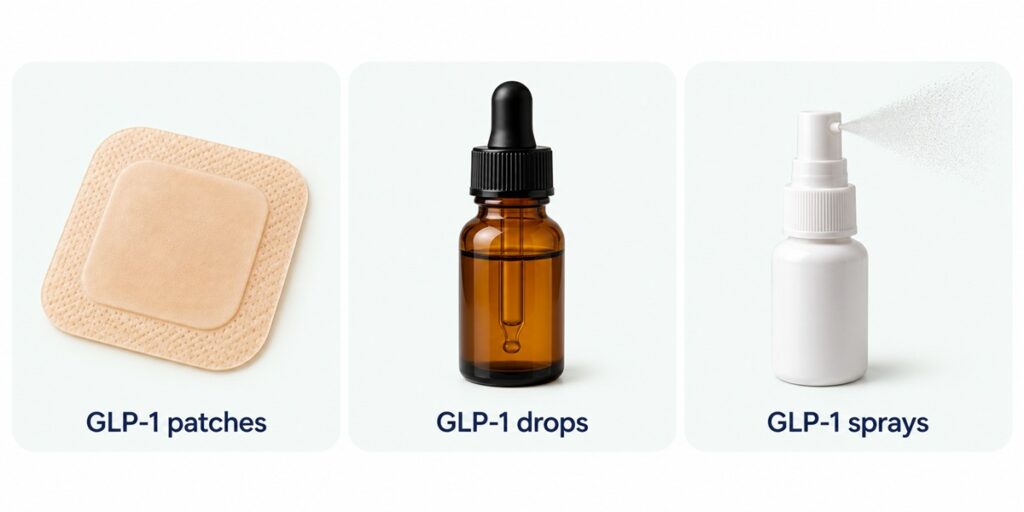
GLP-1 medications are peptides, meaning chains of amino acids. Peptides are too large to cross intact skin passively at useful amounts.
The commonly cited passive skin-penetration limit is roughly 500 Daltons. Native GLP-1 is about 3,298 Daltons, semaglutide about 4,113 Daltons and tirzepatide about 5,300 Daltons. A patch cannot solve that size problem with an adhesive backing.
Many products marketed as GLP-1 patches disclose that they contain no semaglutide, tirzepatide or liraglutide. Instead, they list ordinary supplement ingredients such as berberine, green tea extract, chromium and B vitamins.
Read our guide to GLP-1 patches before buying one. The same concern applies to drops and sprays sold without a prescription.
If you are already taking a prescribed GLP-1
You do not need to create more GLP-1 signaling. Your priorities are adequate nutrition, muscle retention and tolerability.
Start with protein. A target of roughly 0.55 to 0.75 grams of protein per pound of body weight per day is used during active weight loss, with resistance training helping preserve muscle mass. Protein powder can be practical when appetite is low. It is food support, not a special GLP-1 treatment.
During active nausea, large meals and heavy fiber loads can make symptoms worse. Smaller, lower-fat meals and adequate fluids are usually easier to tolerate. Once nausea settles, fiber can help with constipation. See managing nausea on a GLP-1 and the GLP-1 side-effects guide.
Do not add berberine or other glucose-lowering supplements without checking with your prescriber or pharmacist. The combination can create medication interactions or push blood sugar too low.
Who should talk to a prescriber
Food changes are reasonable for steadier appetite, better meal quality and post-meal blood-sugar control. They are not a substitute for assessment when you have established type 2 diabetes, rising prediabetes, obesity with a related condition, a previous cardiovascular event or repeated weight regain.
A clinical conversation can also clarify whether cost, side effects or fear is the real barrier. Start with the GLP-1 medications guide or our drug comparison rather than choosing a supplement from a label.
Frequently asked questions
What foods increase GLP-1 the most?
Protein has the clearest human evidence. A whey preload produced a GLP-1 response about 65% higher than casein in one trial. Add a source of soluble fiber or fiber gut bacteria can ferment for broader benefits, but do not expect a drug-sized hormone increase.
Does berberine work like Ozempic?
No. Berberine has evidence for some blood-glucose effects in people with type 2 diabetes, but human trials have not shown that it raises circulating GLP-1. Weight-loss results are inconsistent and much smaller than results reported for semaglutide or tirzepatide.
Can food increase GLP-1 enough to avoid medication?
Food can improve fullness, glucose response and diet quality. It does not create the sustained GLP-1 exposure of a prescription. If you have a medication indication, discuss the decision with a prescriber rather than relying on a supplement.
Do GLP-1 patches work?
No, not as advertised. GLP-1 peptides are much larger than molecules that passively cross intact skin. Products sold as GLP-1 patches generally contain supplements and no GLP-1 medication.
How long does it take to increase GLP-1 naturally?
A meal can raise GLP-1 within minutes, with the response fading quickly. There is no established eight- to twelve-week timeline for a natural GLP-1 supplement or a durable reset of baseline GLP-1.
Food genuinely nudges your own GLP-1. Build meals around protein and fiber, eat vegetables and protein before starch, and slow down. Buy a supplement only for an effect it has actually demonstrated. If food changes are not enough, the next step is an assessment, not another bottle.